Apptware lab
MVP Development Services
Apptware USA builds your product idea into a working, functional MVP: scoped to the features that prove it, tested with real users, and engineered on architecture that can carry into the full production build. Most engagements move from a validated concept to a working MVP in 6 to 12 weeks, whether you're a startup or an enterprise team.
PROVEN IMPACT
What clients see once we ship.
60%
Faster time-to-market
75%
Higher product success rate
70%
MVP architecture carried into production
Trusted by startups and enterprises
Building what's next.











What We Build
MVP development services, from scoped build to launch
Whether you're building for the web or for iOS and Android, the same six-service framework applies.
MVP Scoping & Feature Prioritization
Turning a validated idea into a fixed feature list: what proves the hypothesis, what waits for v2, and what never made the cut in the first place.
Full-Stack MVP Development
Frontend, backend, and infrastructure built to the minimum feature set that tests the idea, not a second version of the eventual full product.
Backend & API Development
The data layer, business logic, and integrations an MVP needs to run on real data, not a mocked demo environment.
Scalable Architecture Foundation
Built so the parts of the MVP that pass validation carry into the production build without a rewrite once the product needs to scale.
QA & Pre-Launch Testing
Functional, security, and load testing scoped to how real users will actually use the MVP at launch, not a generic test suite.
Go-to-Market & Launch Support
Deployment monitoring, and a feedback channel live from day one, so the MVP has a path to real users and real usage data the moment it ships.
HOW WE WORK
Our MVP development process
Four phases, clear timelines - how a validated idea becomes a working MVP, start to launch.
MVP Scoping & Technical Planning
This is where "minimum" gets defined, not assumed. We turn the validated idea into a fixed feature list, map the technical architecture it needs to run on, and agree the sprint plan, timeline, and cost before a single line of code gets written.
DELIVERABLES
- Fixed MVP feature scope
- Technical architecture plan
- Sprint-by-sprint development timeline
- Cost estimate and statement of work
- Tech stack and integration decisions
- Risk and dependency log
Our Methodology
Why scope discipline decides whether an MVP works
An MVP that tries to prove everything at once proves nothing on schedule. Every Apptware engagement holds a hard line on scope through planning and the build, because what gets left out of version one is as deliberate as what gets built.

The Smallest Version That Proves the Idea
We scope the MVP to the feature set that tests the core assumption, not every feature a full product would eventually need. Anything that doesn't test the hypothesis waits for the next build.

Real Users, Not Internal Opinion
The MVP ships to real users before the roadmap for version two locks in, so the next build cycle is shaped by what people actually do with it, not what the team assumed they'd do.

Architecture Built to Outlive the MVP
A lean build isn't disposable code. The parts of the MVP that pass validation carry into the production build without a rewrite.

A Fixed Timeline, Not an Open Scope
Feature requests that surface mid-build get evaluated against the validation goal first, not added by default. Scope creep is the most common reason an MVP timeline slips.
MVP Development Practice
MVP development, engineered not to become throwaway code
An MVP that gets rushed into production without the architecture, security, or testing a real launch needs turns into technical debt the first time it has to scale.
We build the MVP at the standard the production version will need, not a lower one we plan to fix later. That's the difference between a custom MVP software development partner and an MVP software development company running the same template on every client.
You're not locked into our team to maintain what we build. Every stack choice uses standard, widely-supported tools.

Modular Architecture
Even at MVP scale, features are built as independent components, so the parts that validate move into the production build without being rebuilt around what didn't.

Code Quality Standards
MVP code is reviewed and tested at the same standard as production code, because the features that pass validation usually become the production build.

Documentation
Every scope decision made to keep the MVP lean is recorded, so the reasoning behind what got cut is still there when the roadmap picks it back up.

Security by Design
Authentication and data handling get scoped at the planning stage, not patched in once the MVP is already collecting real user data.

Performance Benchmarking
We test against the load an MVP will see in front of real users, not a lab environment that never matches launch conditions.

Compliance Readiness
For regulated industries, compliance requirements get scoped into the MVP from day one, not treated as a post-validation problem.
Technology Stack
Technologies we've shipped real MVPs with
Stack decisions follow the same logic whether you're building for mobile or for the web: what does the MVP need to prove, and what's the fastest reliable way to prove it?
React Native
Cross-platform mobile MVPs that need native performance on one shared codebase, as used on UnitPlus's investment app.
App Store · Play StoreNode.js / Python
Backend services and data pipelines for MVPs that need real-time processing or automated workflows data extraction, as used on Quantum Mind's AI FAQ system.
AWS · Azure · GCPOpenAI / Vectara
AI enrichment and retrieval layers for MVPs that need to generate or query content automatically.
AI · RAG · RetrievalFirebase
Real-time configuration, authentication, analytics, and backend services for MVPs that need to move quickly and adjust product behavior without a full redeploy, as used on UnitPlus
Real-time backend servicesNo vendor lock-in. Stack selection is driven by what the MVP needs to prove, not our default template.
Cloud & DevOps
Testing & QA
CI/CD

The ROI Case
The ROI case for a scoped MVP over a guessed full build
Clients weighing MVP development cost against an in-house hire consistently find a scoped engagement cheaper end-to-end, not just faster. This is the same math behind MVP development for startups working against a limited runway.

Faster time-to-revenue from a working product

Lower total cost of ownership

Higher adoption from a launch tested with real users

Architecture ready for the next build cycle

Fewer post-launch pivots

Real usage data to guide the roadmap

Shorter runway needed before the next funding round

Clear metrics for the next stakeholder conversation
Vertical Focus
MVP development across key industries
We handle prototype development for industries where getting it wrong is expensive, not just inconvenient.
Compliant patient-facing MVP builds

- Patient intake and scheduling flows built for clinics
- HIPAA-compliant data handling scoped in from day one
- Clinical workflow integrations tested with existing hospital systems
- Telehealth and remote monitoring interfaces validated with patients
- Care-team dashboards built for real clinical workloads
Regulation-ready financial MVP builds

- Onboarding and KYC flows built for compliance
- Real-time fraud-alert interfaces tested under real transaction load
- Secure identity verification flows validated against regulatory requirements
- Compliance-ready audit trails built into every transaction
- Portfolio dashboards tested with real investor data
Connected vehicle MVP builds

- Connected-vehicle diagnostics dashboards tested against real telematics data
- Fleet and dealer booking platforms tested with staff
- Telematics interfaces built for real usage-tracking conditions
- Parts and service inventory tools scoped for dealers
- Production handoff plans tested before embedded hardware integration
Shop-floor ready MVP builds

- Production and quality monitoring dashboards built for plants
- Inventory and supply chain tracking tools tested live
- Dispatch scheduling interfaces validated against real shop-floor conditions
- Predictive maintenance dashboards built for real equipment data
- Operational visibility tools tested with real plant staff
Field-tested agricultural MVP builds

- Field data collection tools tested in real conditions
- Crop and yield monitoring dashboards built for farms
- Offline-first interfaces built for low-connectivity field conditions
- Resource and seasonal planning tools tested with growers
- Equipment tracking interfaces validated under real field use
Shopper-validated commerce MVP builds
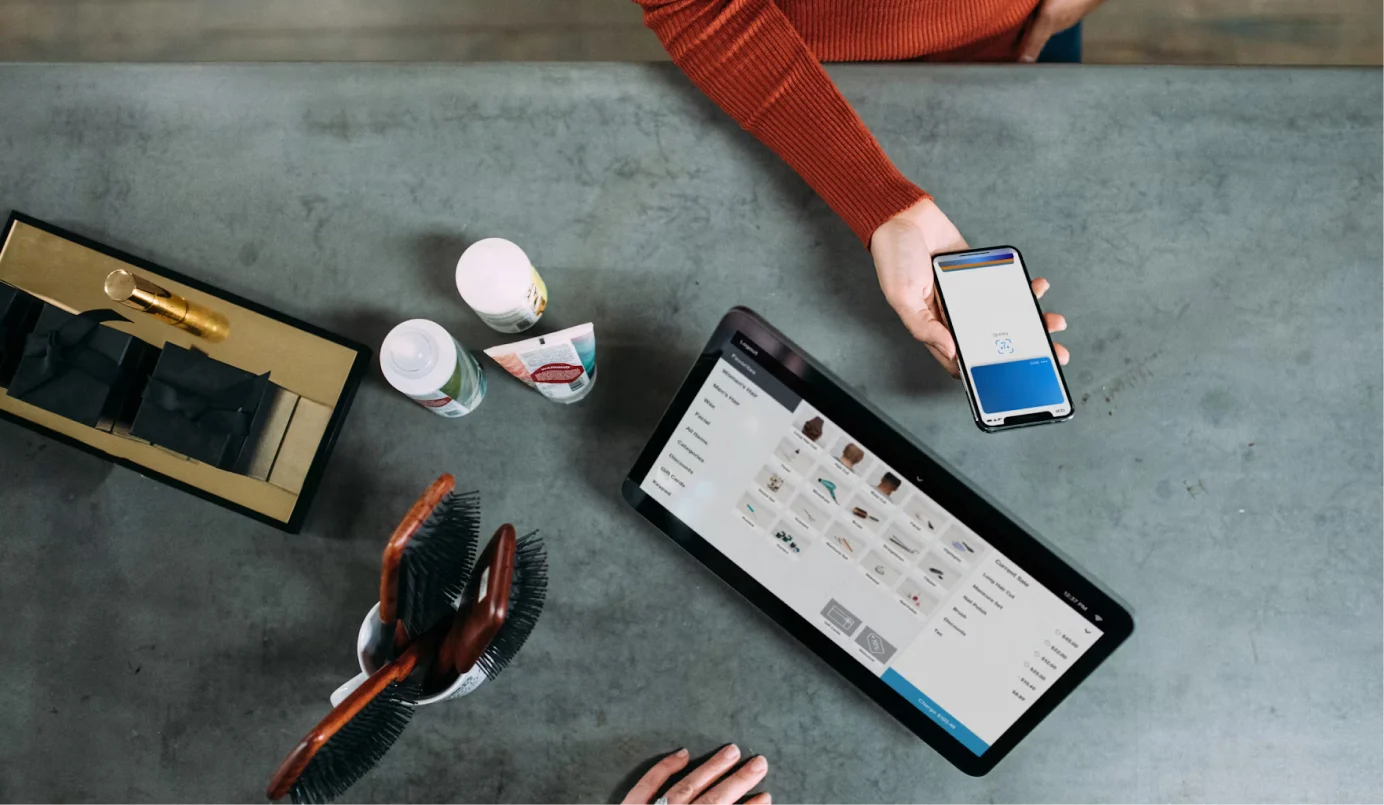
- Product discovery and recommendation flows tested with shoppers
- Checkout and payment integrations validated across real channels
- Inventory and order management dashboards built for teams
- Loyalty and personalization features tested with repeat shoppers
- Store-associate tools validated on the floor with staff

The MVP Development Problem
Why most MVPs never make it to a real launch
Scope, not technology, is what usually stalls an MVP. Most MVPs that never ship do so because "minimum" was never actually defined.

Building the Whole Product as the MVP
Every feature stakeholders can think of gets pulled into version one, because it's hard to argue what should be cut. What ships months later isn't minimum, and it isn't validated either.

No Fixed Definition of "Minimum"
Without a specific hypothesis the MVP is meant to test, every stakeholder has a different idea of what's essential, and scope negotiations replace scope discipline.

Treating the MVP as Disposable
Code gets written to hit a launch date, not to survive contact with real users at scale, so the "successful" MVP still needs a rebuild the moment it needs to grow.
Why Us
What makes Apptware an MVP development company that startups and enterprises trust
Let's distinguish a partner who scopes a real MVP from one who just builds whatever's asked.
01
Scope Discipline, Not Feature Creep
We hold the line on what actually belongs in an MVP, so a six-week build doesn't quietly become a six-month one.
02
Launch-Ready in Weeks, Not Months
You'll have a working, functional product in the hands of real users within 6-12 weeks, not a set of screens pretending to be a product.
03
Built to Scale Past Validation
The architecture behind your MVP is engineered to carry into the production build, not rebuilt from scratch once the idea proves out.
04
Support After the MVP Ships
A validated MVP still needs a plan for what comes next. We stay on to read the usage data and scope the following build cycle.

Apptware Solutions' work helped the client improve their time-to-market. The team retained all core resources throughout the contract. Apptware Solutions assigned a project manager to oversee the tasks and timelines. The team was proactive in communicating and responding to the client.




Get Started
Ready to build your
MVP?
Tell us what you're trying to build. We'll scope the feature set, map out the development timeline, and give you a clear cost estimate before any development work starts, whether it's your first product or an enterprise team's next release.
 No-cost discovery audit
 100% IP ownership
 No commitment required
 US & India presence
FAQ'S
Answers to common questions about MVP development
Not always. If the idea already has a validated direction, we can scope straight into an MVP build. If it doesn't, we'll recommend starting with a prototype to test the direction first, as a separate, shorter engagement before any MVP development budget gets committed.
Let's scope your MVP
Have a validated idea ready to build? Spend 45 minutes with our product engineers. We'll scope the MVP feature set, map a development timeline, and return a roadmap with cost, all within 5 business days and no commitment. We take on both first-time builds and enterprise-scale engagements, from the US or India.
 USA
USA INDIA
INDIA


Got a similar challenge?
Have a product idea you're trying to validate?
Let's talk about what Apptware can build for you.