Apptware Lab
Legacy Modernization & Quality Engineering
The riskiest part of modernizing an old system usually isn't the rewrite. It's not knowing what still depends on the parts you're about to change. We start legacy modernization services with test coverage for exactly that reason: so re-architecture and cloud migration happen against a system you can actually verify, not one you're guessing about.
PROVEN IMPACT
What clients see once we ship.
50%
reduction in maintenance costs
40%
faster performance
99.9%
system reliability
Trusted by enterprises
Building what's next











What We Build
Legacy modernization services built around what has to keep running
These are the legacy application modernization services we run, standalone or paired with a quality engineering layer. Most engagements start with the assessment and testing, then move into re-architecture.
Application Re-Architecture
Break a monolith into services scoped to how the system actually gets used, not a default microservices split.
Cloud Migration
Move workloads to cloud infrastructure sized for actual usage patterns, rather than a lift-and-shift that just relocates the same bottlenecks.
Quality Engineering & Test Automation
Build a real automated test suite around a system that may have never had one, starting with the paths that break the most.
API & Integration Layer
Wrap legacy functionality in APIs so new systems can integrate with it without touching the legacy code directly.
Security & Compliance Upgrade
Bring authentication, data handling, and dependency versions up to current standards as part of the modernization, rather than treating it as a separate project later.
Modernization Approaches We Use
The right migration approach depends on what you can afford to risk
Not every legacy system should be migrated the same way. Which approach fits comes down to how critical the system is and how much test coverage exists to verify a change
01
Strangler Fig
New functionality gets built alongside the old system and traffic gets routed to it incrementally, module by module, until the legacy system can be retired. Best fit when the system can't go down and a full rewrite is too risky to attempt at once.
02
Parallel Run
The new system runs alongside the old one processing the same inputs, with outputs compared before cutover. Best fit for financial or compliance-critical systems where a silent data discrepancy is unacceptable.
03
Phased Cutover
Modules get migrated and cut over one at a time on a schedule, with the legacy system handling what hasn't moved yet. Best fit when there's a clear seam between modules and moderate risk tolerance.
04
Full Re-Platform
The whole system moves to new infrastructure and architecture in one coordinated release. Reserved for smaller systems or ones with strong existing test coverage, where the risk of a single cutover is manageable.
Test Coverage Maturity
You can't safely modernize what you can't verify
Most legacy systems that are hard to change aren't hard because the code is bad. They're hard because nobody can tell what still works after a change. We scope quality engineering against where your system actually sits
01
Untested
No automated tests exist; every release is a manual regression pass and a leap of faith. Priority: build automated coverage for the highest-risk paths before touching architecture.
02
Partially Covered
Some critical paths have tests, but coverage is inconsistent and confidence is low outside the tested areas. Priority: extend coverage to match what the modernization roadmap will actually touch first.
03
Regression-Safe
Automated tests catch breaking changes reliably, but the suite is slow or brittle enough that people work around it. Priority: speed and reliability, so the suite gets trusted, not skipped.
04
Continuously Verified
Tests run on every change with fast, reliable feedback, and the team relies on them to ship confidently. Priority: keep coverage current as the system gets re-architected, not left behind it.
HOW WE WORK
Our legacy modernization process
Four phases, clear timelines - how a legacy system actually gets from an unverified codebase to one running in production with test coverage behind it.
Codebase & Test-Coverage Audit
The system gets mapped against what it actually depends on, not what the documentation says it does. We identify the highest-risk paths, the modules with no test coverage, and the modernization approach that fits each module's risk tolerance, before any architecture decision gets made.
DELIVERABLES
- Codebase and dependency map
- Test-coverage gap report
- Risk-prioritized module list
- Recommended modernization approach per module
- Timeline and cost estimate
Our Methodology
Why test coverage comes before the rewrite
Modernizing a legacy system is a promise to keep it doing what it already does, plus whatever it's being built to do next. Every Apptware engagement builds verification for that promise before touching architecture, because a change you can't verify is just a different kind of risk than the legacy system you started with.

Test Coverage Before Architecture
The highest-risk paths get automated test coverage before a single module gets re-architected, so changes are verified, not hoped for.

Parity Enforced On Every Migration
Migrated modules get their outputs compared against the legacy system's before cutover, not assumed to match.

Risk Modeled at Assessment Time
Which migration approach fits which module gets decided during the audit, based on what the system can afford to risk, not applied as a default template.

Verified Against Real Production Data
Migration scripts and test suites get validated against real production data samples, not synthetic data that misses the edge cases that actually break systems.
Modernization Engineering Practice
Modernization engineering, scoped to keep the business running
A migration that works in staging and one that survives a legacy system's real edge cases, the ones nobody documented, are built differently
Here's where that gap gets closed.

Security by Design
Authentication, data handling, and dependency versions get brought current during re-architecture, as part of the work rather than as a separate project.

Documentation
Every architecture and migration decision is recorded, so tribal knowledge locked in the old system doesn't disappear with the rewrite.

Incremental Architecture
Modules get re-architected and shipped one at a time, so a mistake in one module doesn't block the whole migration.

Data Migration Integrity
Migration scripts are validated against real production data samples, not synthetic test data that misses edge cases.

Compliance Readiness
For regulated systems, compliance requirements get verified against the new architecture during migration, rather than discovered during a post-launch audit.
Technology Stack
Technologies we modernize and test with
We're not tied to one migration path. Architecture and tooling choices come out of what the legacy system actually needs to become.
Node.js / Java / .NET
Re-architecture target languages scoped to the existing team's expertise and the legacy codebase's actual language.
Re-ArchitectureAWS / Azure / GCP
Cloud migration target scoped to existing infrastructure investment and compliance needs.
Cloud MigrationDocker / Kubernetes
Containerisation for services broken out of the legacy monolith.
Containers & OrchestrationJest / Selenium / Cypress
Test automation frameworks scoped to what the legacy system's interfaces actually are (API, web, batch).
Test AutomationNo vendor lock-in. Architecture and tooling choices are driven by what the legacy system actually needs to become, not a default migration path or technology template.
Re-Architecture
Containers & Cloud
Testing

The ROI Case
The business value of modernizing with test coverage first
These are the gains clients report most, in the months after a module ships, not just on migration day.

Lower maintenance cost per system

Fewer production incidents after release

Faster feature delivery on the modernized codebase

Reduced re-architecture rework

Lower risk per migration cutover

Faster onboarding for new engineers

Reduced technical debt accumulation

Continuous system reliability monitoring
Vertical Focus
Modernization risk looks different in every industry
A slow legacy system is a productivity drag in retail. In healthcare or BFSI, an unverified change is a compliance incident. That's the range of industries these migrations get scoped for.
Modernization built for clinical compliance
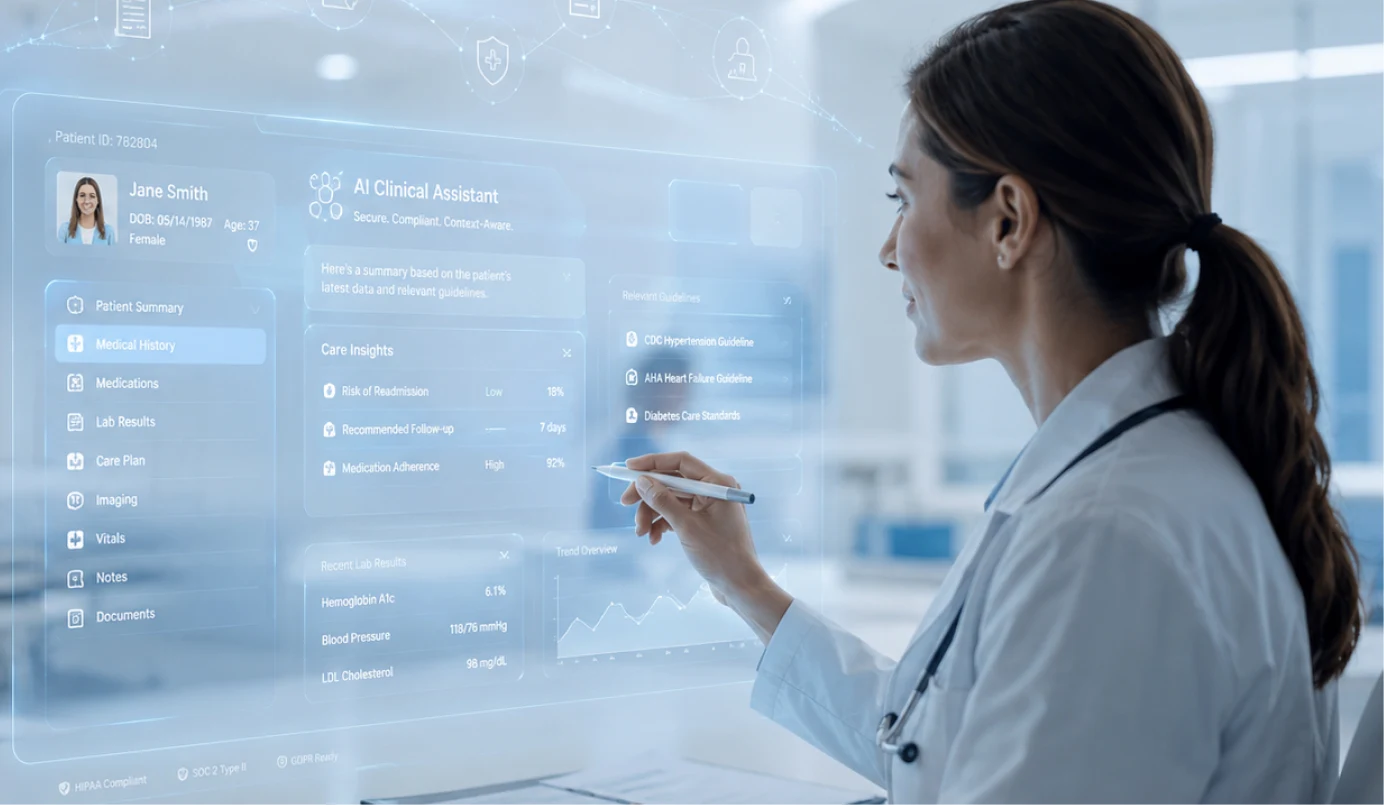
- Patient-data systems, re-architected around continuous care delivery
- HIPAA-compliant migration and consent-data handling
- EHR and clinical workflow re-integration with existing systems
- Telehealth platform migration and monitoring feeds
Modernization built for regulatory continuity

- Core banking systems, migrated without downtime
- Compliance-verified data migration and audit controls
- Regulated transaction workflows, verified against real production data
- Legacy banking functions, wrapped in APIs for safe external access
Modernization for connected-vehicle platforms

- Telematics systems, rebuilt around real-time data
- Dealer and CRM platform migration, tested before cutover
- Fleet-management workflows, re-architected for real-time fleet visibility
- Connected-vehicle telemetry pipelines, validated against live fleet data
Modernization for shop-floor legacy systems

- Plant ERP systems, migrated without disrupting output
- Inventory and dispatch workflows, re-integrated for real-time visibility
- Production-line systems, tested against real shop-floor conditions
- Legacy plant-floor systems, integrated with MES through new APIs
Modernization for field-operations systems

- Farm-management systems, migrated to the cloud
- Offline-first architecture, rebuilt for low-connectivity field operations
- Seasonal-planning workflows, re-architected around real harvest cycles
- Legacy field-sensor data, made available to farm equipment via API
Modernization for high-traffic commerce systems

- Inventory systems, rebuilt around real-time sync
- Checkout and order-management workflows, migrated without dropping transactions
- Commerce-platform systems, tested against real peak-traffic patterns
- Legacy POS systems, opened up for omnichannel integration via API

The Legacy Modernization Problem
Why modernization projects stall or break production
Architecture work almost always starts before anyone knows what the system's actual test coverage is, and that's usually where projects stall:

Re-Architecture Without Test Coverage
Modules get rewritten against assumptions about what they do, and production reveals the undocumented edge case the rewrite missed.

Big-Bang Cutover Risk
An entire system gets migrated in one release instead of incrementally, so a single bug blocks the whole business instead of one module.

Technical Debt Prioritized by Ease, Not Risk
Teams modernize whatever's simplest to touch instead of what's actually causing the most incidents.
Why Us
What makes Apptware a legacy modernization partner
A lot of modernization projects start with a rewrite plan. Ours starts with a test suite, because a rewrite you can't verify is just a different kind of risk than the legacy system you started with.
01
Test Coverage Before Re-Architecture
We build automated tests for the highest-risk paths before touching the architecture, so changes are verified, not hoped for.
02
Phased Migration, Business Stays Running
The legacy system keeps running while new modules get migrated incrementally, not a single risky cutover.
03
Risk-Prioritized Roadmap
We modernize what's actually causing incidents or blocking work first, ahead of whatever's easiest to touch.
04
Support After Migration
A migrated system still needs monitoring and a roadmap for the next module.

Apptware Solutions' work helped the client improve their time-to-market. The team retained all core resources throughout the contract. Apptware Solutions assigned a project manager to oversee the tasks and timelines. The team was proactive in communicating and responding to the client.




Get Started
Ready to modernize
your legacy system?
Tell us what system you're running and what's breaking most often. We'll run the codebase and test-coverage audit and give you a real cost estimate before any development work starts.
 No-cost modernization assessment
 100% IP ownership
 No commitment required
 US & India presence
FAQ'S
Answers to common questions about legacy modernization & quality engineering
Codebase assessment, test coverage buildout, application re-architecture, cloud migration, and post-migration monitoring. Scope is set at the assessment, not assumed upfront.
Let's talk about your legacy modernization roadmap
Got a system nobody wants to touch because nobody's sure what breaks if they do? Spend 45 minutes with our modernization engineers. We'll audit the codebase and test coverage and come back with a roadmap, timeline, and cost within 5 business days.
 USA
USA INDIA
INDIA


Got a similar challenge?
Running on a system that's getting harder to maintain?
Let's talk about what Apptware can build for you.