AI LAB
Computer Vision Services That Turn Visual Data Into Results
From object detection and image segmentation to defect inspection, face recognition, and real-time video analytics — Apptware's computer vision development services give your enterprise the ability to see, understand, and act on visual data at a scale no human team can match.
PROVEN IMPACT
Results clients can feel.
98%
CAST Score
80%
QC Efficiency Increase
40ms
Real-time Interface
TRUSTED BY ENTERPRISES
RUNNING AI IN PRODUCTION











What We Build
Our Computer Vision Development Services
Every engagement starts with your operational problem and ends with a measurable business outcome.
Computer Vision Consulting & Strategy
Before building anything, we validate whether CV is the right approach for your specific use case — and which architecture, model type, and deployment strategy will deliver the best ROI. Use case identification, data readiness auditing, PoC design, and a phased roadmap your commercial and technical stakeholders can approve on day one.
Object Detection & Recognition
Train custom object detection models that identify, locate, and classify objects within images and video streams with industry-leading accuracy. From product defect detection at 120fps and vehicle counting, to merchandise identification in retail and medical device recognition in clinical settings — fine-tuned on your domain data.
Image Segmentation & Classification
Partition visual content into meaningful segments and classify what is in each one — at pixel-level precision. CT scan segmentation for radiology. Satellite imagery analysis for agriculture. Plywood defect grading for manufacturing QC. Product attribute detection for ecommerce personalisation.
Face Recognition & Biometric Systems
Deploy secure, GDPR-compliant facial recognition and biometric verification for access control, identity verification, attendance management, and customer authentication. Trained across lighting conditions, angles, occlusions, and demographic diversity — with bias auditing built into every deployment.
OCR, ICR & Intelligent Document Processing
Extract structured data from any visual document — invoices, prescriptions, contracts, ID documents, forms, handwritten records — with AI-powered OCR and ICR pipelines feeding clean JSON directly into your enterprise systems. Processing time drops by 85%. Error rates approach zero.
Real-Time Video Analytics & Surveillance Intelligence
Turn passive camera networks into active intelligence systems. Real-time crowd counting. Workplace safety monitoring for PPE compliance. Predictive maintenance via thermal imaging anomaly detection. Retail footfall analytics. Every deployment includes edge computing capability for low-latency inference.

How It Works
How Enterprise Computer Vision Systems are actually built
Decisions made at each architectural stage determine whether your model achieves 75% accuracy or 98%. Here is exactly what separates the two.
Faster knowledge work across operations
CV models learn from labelled images and video. The quality, diversity, and volume of training data determines the ceiling of your model's performance. We audit your existing visual data assets, identify gaps, and build annotation workflows — bounding boxes, segmentation masks, keypoints, polygon labels — designed to produce the highest-quality training signal. Images are preprocessed through normalisation, augmentation, and transformation pipelines to maximise generalisation across real-world conditions.
Model Architecture & Selection Training
Different CV tasks require fundamentally different architectures. Object detection: YOLOv8 or Faster R-CNN depending on latency vs accuracy requirements. Segmentation: U-Net (medical) or Mask R-CNN (industrial). Classification: ResNet, EfficientNet, or Vision Transformers. We select the right architecture for your problem, train on your domain data, and evaluate against weighted F1, precision/recall, mAP, and latency benchmarks — not generic public dataset scores.
Model Integration & Enterprise Deployment
A trained CV model only creates value when embedded inside your operational systems. We integrate CV models into your existing infrastructure — ERP, MES, SCADA, or custom platforms — via secure API architecture. Deployment targets include cloud (AWS, Azure, GCP), on-premise GPU infrastructure for air-gapped environments, and edge devices (NVIDIA Jetson, Intel OpenVINO) for real-time inference without cloud dependency.
MLOps, Monitoring & Continuous Improvement
Production CV models drift as lighting conditions change, products evolve, and operational contexts shift. Our MLOps practice deploys Prometheus-based monitoring dashboards, automated drift detection, and retraining pipelines that keep your model within defined accuracy thresholds. Quarterly model health checks and regular updates maintain performance as your visual environment changes over time.
Domain-Tuned CV vs Generic Cloud APIs
Why the accuracy gap matters in regulated environments
70–80%
Accuracy on domain-specific tasks
- Your images processed on third-party servers
- No understanding of your domain objects
- Breaks when conditions change
- No retraining on your operational data
95–98%
Accuracy on your specific domain tasks
- Your images stay inside your infrastructure
- Trained on your exact objects and defect types
- GDPR, HIPAA, ISO 27001 compliant by design
- Continuous retraining as environment evolves
HOW WE WORK
Our Computer Vision Development Process
Structured, milestone-driven, with defined deliverables at every phase. You always know where your project stands.
Business Analysis & CV Feasibility Assessment
We evaluate your operational challenge, existing data assets, infrastructure constraints, and compliance requirements. We help you decide whether computer vision — or more conventional analytics — is the right solution for each use case, preventing expensive misalignments before development begins.
DELIVERABLES
- Business objective mapping
- CV use case identification and prioritisation
- Data readiness audit
- Feasibility and ROI assessment
- Architecture blueprint
- Risk and compliance evaluation
Technical Depth
Our Advanced Computer Vision expertise
Our CV engineers work across the full spectrum of computer vision capabilities — from classical image processing through to state-of-the-art deep learning architectures.
Here is what we build with and what each capability enables.
Every model we build is evaluated against your domain-specific benchmarks — not generic public dataset scores that don't reflect your operational conditions.

Image & Video Analysis
Deploy advanced CV systems that analyse images and video streams to extract quantifiable insights — motion detection, scene understanding, temporal pattern recognition, and real-time anomaly identification. Applied to surveillance, sports analytics, retail intelligence, and industrial monitoring.

Object Detection & Recognition
Custom object detection pipelines using YOLOv8, Faster R-CNN, SSD, and DETR architectures. Detect multiple object classes simultaneously at inference speeds suitable for real-time operational deployment — from assembly line inspection at 120fps to retail shelf monitoring.

Face Recognition & Biometrics
Enterprise-grade facial recognition using ArcFace, DeepFace, and FaceNet architectures with liveness detection and anti-spoofing layers. GDPR-compliant by design with demographic bias auditing as standard across every deployment.

OCR & ICR Document Intelligence
Optical Character Recognition and Intelligent Character Recognition for printed and handwritten text extraction. Integrated with document understanding models for structured data extraction from complex document layouts — prescriptions, contracts, invoices, regulatory forms.

Spatial Analysis & 3D Vision
Depth estimation, point cloud processing, and 3D reconstruction from 2D camera inputs. Applied to autonomous navigation, robotic arm guidance, warehouse mapping, and surgical assistance systems where spatial awareness is operationally critical.

AI Image Processing & Enhancement
Image restoration, super-resolution, style transfer, and noise reduction models to improve visual data quality before downstream analysis. Particularly valuable for medical imaging, satellite imagery, and historical document digitisation workflows.
Our CV Stack
What We Build With
Our computer vision development company works across the full range of deep learning frameworks, model architectures, and deployment platforms. Every technology choice is driven by your use case — not our vendor preferences.
Model Architectures
CV & ML Frameworks
Deep Learning & Training
Edge & Deployment
Data & Annotation
Cloud & Infrastructure
Model-agnostic. We select the right architecture for your problem — not the one we are most comfortable building in.
Industry Applications
Computer Vision Solutions across every Industry where visual data creates value
Hover each card to reveal specific use cases deployed in real enterprise environments.
Intelligent Healthcare Systems
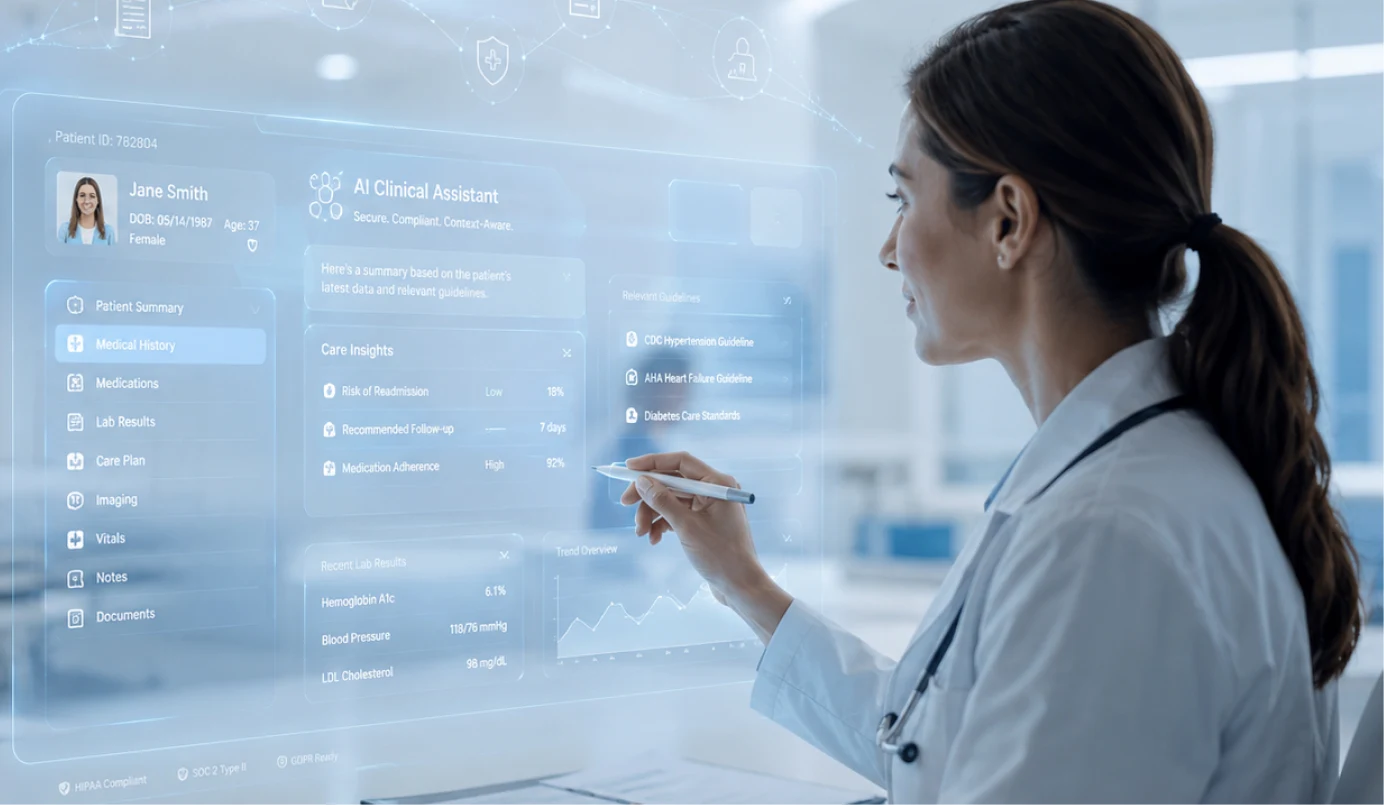
AI built for clinical environments, trained on the workflows, compliance frameworks, and medical terminology that actually
AI for Modern Banking & Insurance

From fraud detection to underwriting, we build AI that holds up under regulatory scrutiny and still runs fast enough for real-time decisions.
Intelligent Automotive Solutions
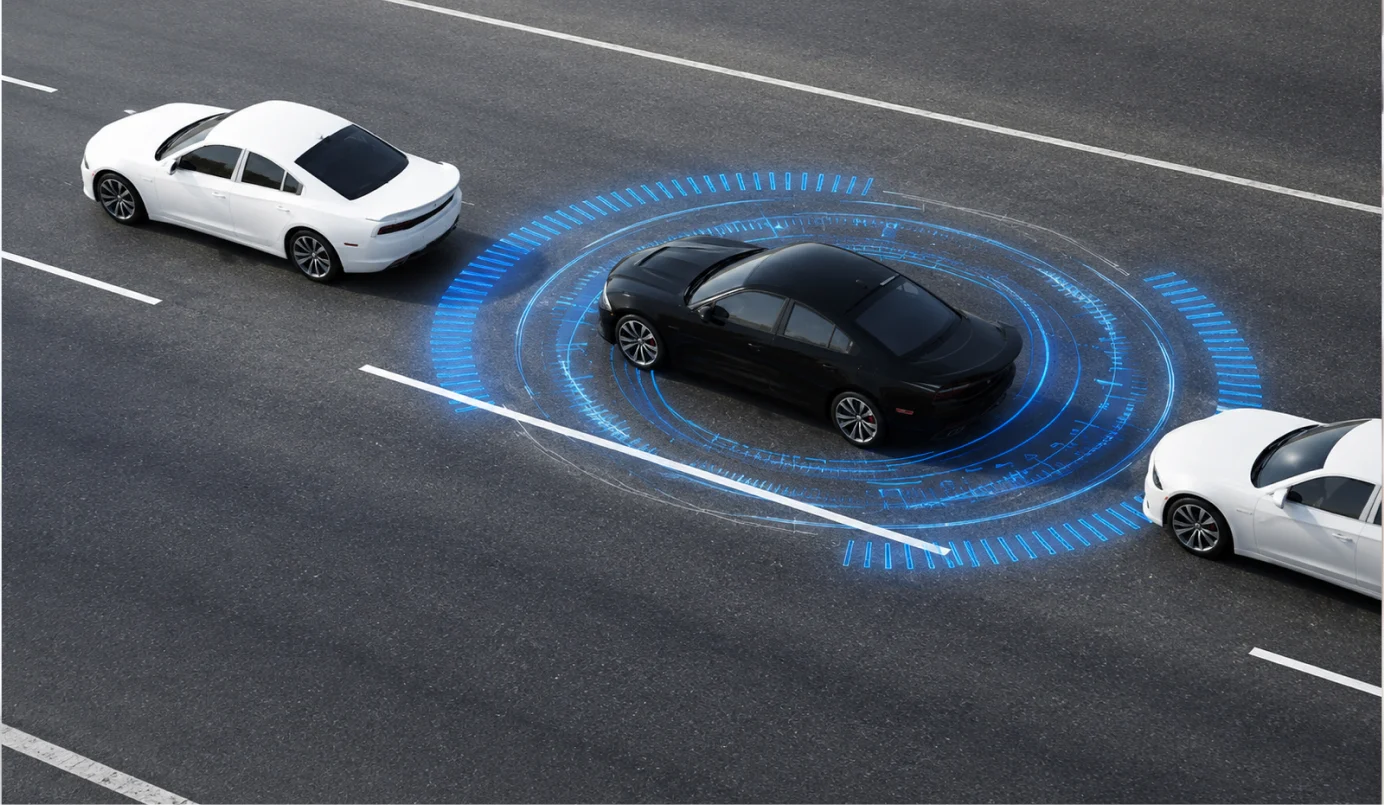
AI built for the automotive industry, trained on driving workflows, safety protocols, and vehicle dynamics that actually improve performance.
AI-Powered Manufacturing
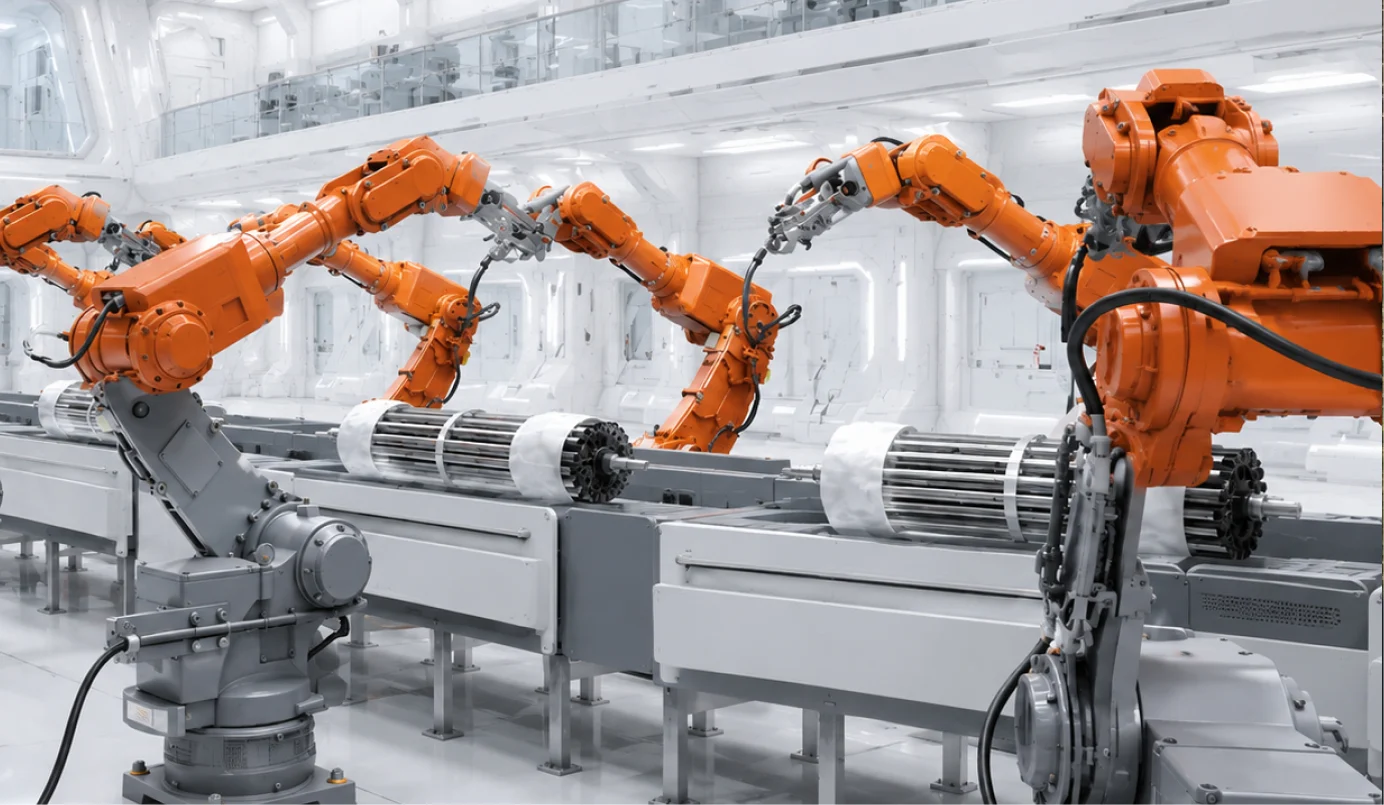
AI built for the shop floor, predictive maintenance, quality control, and supply chain intelligence that actually keeps pace with production.
AI-Powered Agriculture
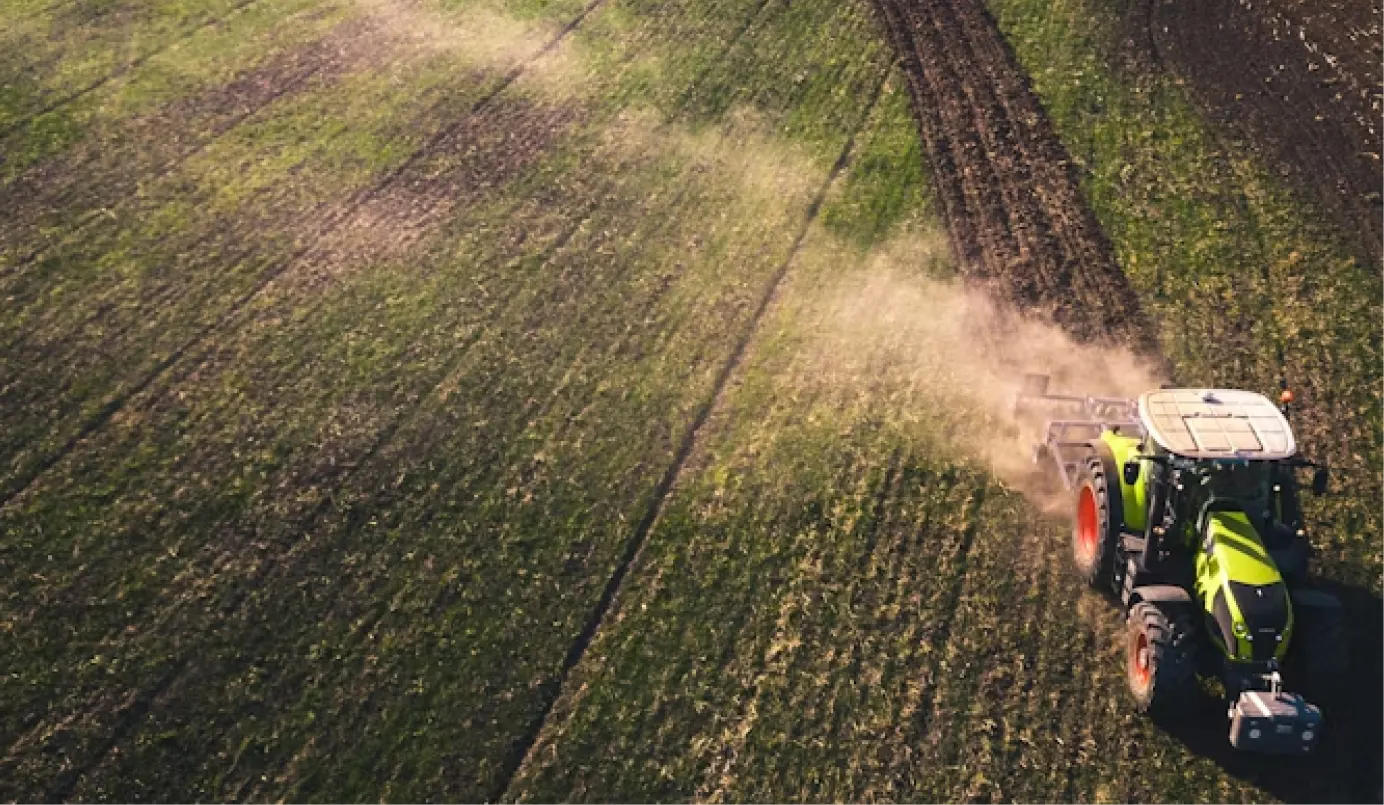
Crop monitoring, yield prediction, and resource optimisation: AI that works at the scale real agricultural operations demand.
AI for Modern Retail

Deliver personalized shopping experiences, optimize inventory, and automate operations with AI built for today's fast-moving retail landscape.

The Enterprise CV Problem
Your Business Generates more visual data than your teams can physically review.
Cameras on production lines. Medical imaging systems. Retail shelf sensors. Satellite feeds. CCTV networks. Every frame contains intelligence — if you have the infrastructure to extract it. Most enterprises don't.

Quality Control That Still Depends on Human Eyes
Human inspectors miss up to 20% of defects on repetitive tasks after 20 minutes of continuous work. A computer vision system does not get tired, does not lose attention, and does not miss a defect in the 10,000th unit that it missed in the 9,999th.

Cameras Everywhere. Intelligence Nowhere.
Most enterprises have invested heavily in camera infrastructure — CCTV, production line cameras, medical imaging devices, drone systems. Almost none have the AI layer that turns that footage into structured, actionable business intelligence.

Visual Data That Cannot Be Used for Compliance Evidence
In healthcare and regulated manufacturing, the ability to produce audit-ready documentation of visual inspection processes is a regulatory requirement. Manual inspection workflows cannot generate the traceability records that modern compliance frameworks demand.
Why Us
What What makes Apptware a serious Computer Vision Development Company
01
PoC in 14 Days — Not 14 Weeks
Before any production investment, we deliver a working CV Proof of Concept running against your actual visual data — defect samples, video feeds, medical images, or document scans. You validate accuracy, test against operational edge cases, and make the production decision based on real evidence. No slide decks. No theoretical benchmarks from other clients' environments.
02
Domain-Tuned Models — Not Off-the-Shelf APIs
Cloud CV APIs achieve 70–80% accuracy on general-purpose tasks. Our domain-specific models — trained on your images, annotated with your classification schema, evaluated against your quality standards — consistently reach 95–98% accuracy. For quality control, medical imaging, and compliance-sensitive applications, that gap is not cosmetic. It is the difference between a system you can trust and one you cannot deploy.
03
Edge-Ready, Compliance-Native Architecture
Every CV system we build includes security controls, data residency configurations, and compliance frameworks for your regulatory environment — GDPR, HIPAA, ISO 27001. We deploy on cloud, private VPC, or on-premise GPU with air-gapped capability for the most sensitive environments. For manufacturing QC at 120fps, edge deployment on NVIDIA Jetson is the only architecture that meets real-world latency requirements.
04
We Stay After Go-Live
Visual environments change. Products evolve. Lighting conditions shift with seasons. Equipment ages. Our MLOps practice monitors your CV model's performance continuously post-deployment — tracking accuracy, triggering retraining cycles when performance drops below defined thresholds, and delivering monthly reports that hold us accountable to the benchmarks we set on day one.

Apptware Solutions' work helped the client improve their time-to-market. The team retained all core resources throughout the contract. Apptware Solutions assigned a project manager to oversee the tasks and timelines. The team was proactive in communicating and responding to the client.




Get Started
Ready to See What
AI Can Do for You?
Stop evaluating AI in the abstract. We'll audit your data, workflows, and systems to show you exactly where custom AI can create real ROI, before you commit to anything. No pitch decks. No generic demos. Just a clear, honest picture of what's possible for your business.
 No-cost AI audit
 100% IP ownership
 No commitment required
 US & India presence
FAQ'S
Frequently Asked Questions About Computer Vision Services
Computer vision services cover the end-to-end process of designing, building, and deploying AI systems that enable machines to interpret, analyse, and act on visual data from images, video, and real-world environments. For enterprise clients, this means building CV systems that can detect product defects at production line speed, classify medical images with radiologist-level accuracy, extract data from document scans, recognise faces for access control, and monitor facilities for safety compliance — at a scale and consistency that human inspection teams cannot sustain. Real computer vision development services include data annotation, model architecture selection, training, enterprise integration, compliance validation, and post-deployment monitoring.
Ready to Build Your Next AI-native Product?
Give us 45 minutes to understand your goals. We’ll recommend where AI can create measurable impact and share a practical roadmap with timelines, architecture, and delivery estimates within five business days.
 USA
USA INDIA
INDIA
Got a similar challenge?
Have a similar engineering partnership challenge?
Let's talk about what Apptware can build for you.